
Barnaby Kerekes

Kamloops Symphony Orchestra · Music Director + Principal Conductor Search

Barnaby Kerekes

Artistically accomplished, community inspired.

Click to view this application online

On the podium

Built for the breadth this job asks.

A Music Director is asked to be artistically serious, organisationally sharp, educationally invested, and operationally fluent — all at the same time. The four seats below each taught me one of those at depth: rehearsing inside a full orchestra; building a training ensemble from nothing; running a community group from inside and outside the board; keeping the lights on at a music school. Each prepared me for a part of this role. Together, they prepare me for the whole of it.

  1. 01

    Assistant Conductor

    Vancouver Philharmonic Orchestra

    Working inside a full symphony orchestra on the core symphonic repertoire — the rehearsal craft, the section-to-section listening, and the partnership with the board on the organisation behind the music.

  2. 02

    Co-Founder & Music Director

    Vancouver Orchestral Training Society

    Initiated and collaborated to build a professional-simulation orchestra from nothing, with masterclasses led by Vancouver Symphony players. The point was to develop local and regional talent for the next step up — the exact pipeline a regional orchestra depends on.

  3. 03

    Performer, Substitute Conductor & Former Board Member

    Toronto Concert Band

    Played in the ensemble, stepped onto the podium as substitute, invited to perform in concert, and served on the board. Operational empathy: a community ensemble's lifecycle from every seat in the room, which carries directly into the KSO's relationship with its Chorus and Music School community.

  4. 04

    Owner & Operator

    ABC Academy of Music

    Twenty-three years owning and running an independent music academy. The day-to-day reach is broad on purpose: programming, scheduling, hiring and managing teachers, parent and student communications, finance, governance, marketing, facility, and the steady administrative rhythm that keeps a music institution healthy year after year.

Beyond the podium

Most of what a Music Director does never reaches the audience — fundraising, governance, public and media relations, hiring conversations, production logistics, and the thousand quiet decisions that turn a season on paper into a season on stage. From each of the seats above I have done that work in earnest. Bringing the technical, administrative, and operational skills to bear in the background is what lets a vibrant, living performance reach the community out front.

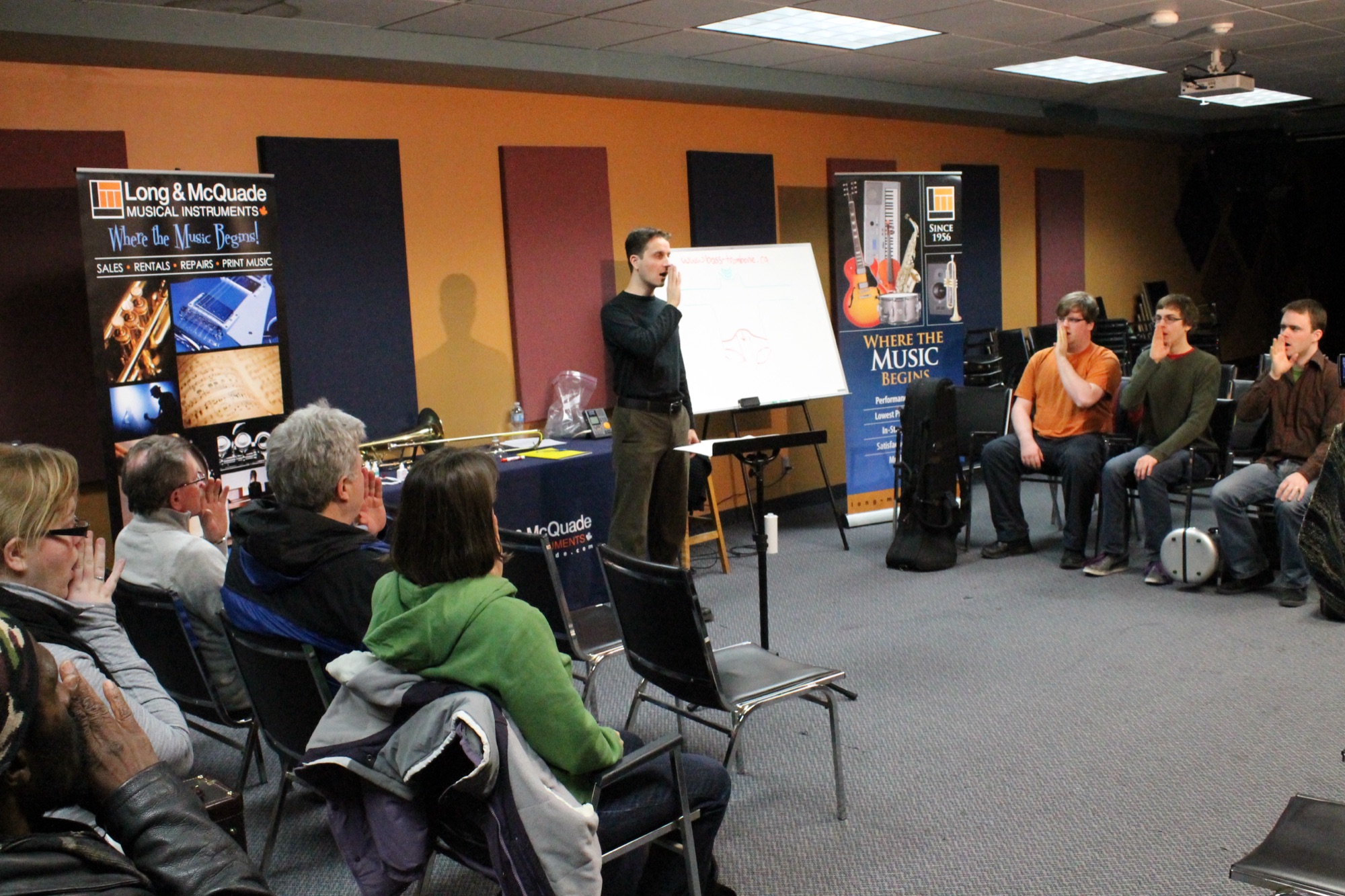
Barnaby Kerekes leading a masterclass
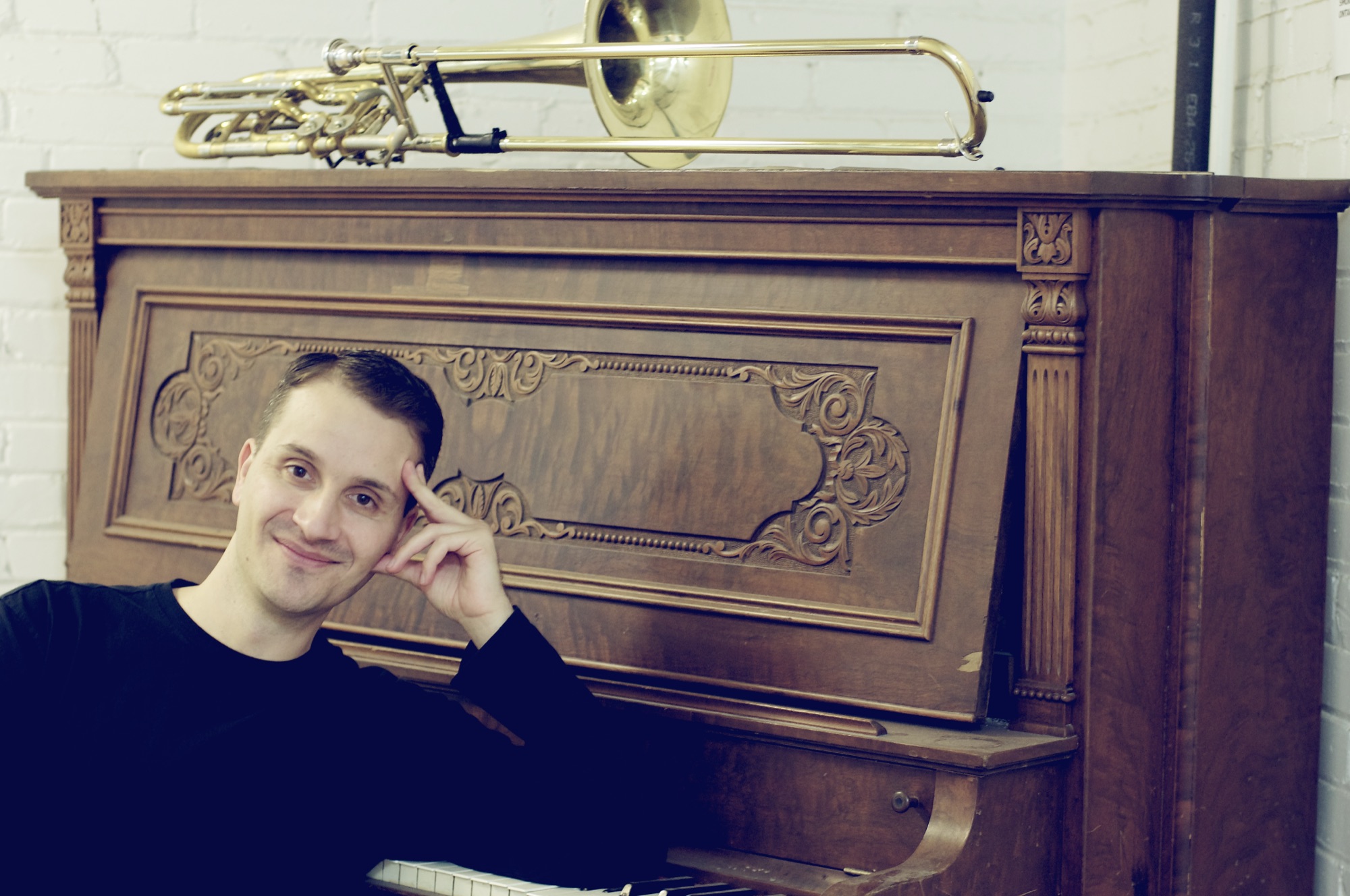
Barnaby Kerekes at the piano

Vision for the KSO

An enthusiastic creator and collaborator, in equal measure.

I come to this application with a personal connection: I have played with the Kamloops Symphony Orchestra (KSO), under Bruce Dunn. The experience left me with a lasting respect for the musicianship in the room and for what the KSO asks of, and gives to, its players and community. I am not arriving from outside the relationship — I have been on the other side of the stand, and I remember what that side asks of a conductor.

The KSO's posting names what any artistically serious orchestra needs from its Music Director: deep listening, hands-on commitment, and the drive to pursue new opportunities. Those are not abstractions for me. They are how I have come to work with orchestras, with boards, and with the musicians I sit beside and stand in front of.

The podium is the hub where the Music Director and Conductor meets every stakeholder — the Executive Director, the musicians, the Board — and where decisions are made. Seasons shaped from conversations, not handed down from a desk. Rehearsals respect the time of every player in the room. Programming balances the core repertoire that earns trust, the new work that earns attention, and the local and Canadian voices that earn the KSO its high standing in the BC Interior.

The opportunity to establish a living connection to Indigenous communities, voices, and artistic practices is one of the most exciting pieces of the opportunity with the KSO; I have not yet built sustained collaborations with Indigenous artists or communities, and growing my own awareness and education of these, is of deep interest. Concretely: listen first — to the people already doing this work in the BC Interior; learn the context, the protocols, and the artists; and incorporate what I learn into real programming and real partnerships over time, as a sustained part of how a modern Canadian orchestra should habitually act, not a one-off gesture.

On availability: I am self-employed and run my existing projects remotely, which lets me give Kamloops what a Music Director actually needs — multi-week residency blocks across the season for rehearsal weeks, planning, the Music School, board and donor work, and time in the community — with flexible travel for the working sessions in between. I would come to this role as a willing participant in the KSO's strategic priorities, working with the Executive Director and Board to advance the organisation's stated objectives, not only the artistic ones.

I am devoted to our shared craft, and would love to return to Kamloops on this new shared journey with you.

Education & the Music School

A Music Director with education at heart.

The KSO posting champions lifelong learning and explicitly names support of the KSO Music School as part of the Music Director's work. This is a core value to me.

  1. A peer and advocate, not a visitor.

    I own and run ABC Academy of Music. I would love to add my experience and shared vocabulary, and learn from yours — the instincts a fellow operator develops over twenty-three years of keeping a music institution healthy. That makes it easier to collaborate, to ask the right questions, and to back the school's leadership as a knowledgeable peer rather than as an uninformed outsider.

  2. Education is one of my performance-improvement tools.

    For decades I have taught privately, taught at summer camps and masterclasses, and helped co-found the Vancouver Orchestral Training Society (VOTS) — with Christie Goodwin, Stefan Hintersteininger, Joanna Schulz, and Stacey Taylor — a professional-simulation orchestra for young musicians coached by Vancouver Symphony players. Most recently I am building SimOrch, a nascent project in the spirit of VOTS, where scholarship-funded performances will put student musicians on stage with mentors and pay forward the next generation. Every one of those settings — the lesson, the camp, the masterclass, the training-orchestra rehearsal — feeds back into my conducting practice: how I hear sections, how I structure rehearsals, how I communicate with players, and how I bring the music to life for every musician in the room, in the age- or situationally-appropriate way.

  3. Contributing where the KSO sees opportunity and need.

    I would welcome the chance to contribute wherever the KSO sees room for the Music Director — on the podium, at the school, around a planning table, out in the community — in whatever shape proves most useful. Concretely: the work I already do at ABC Academy of Music — recital production, student-to-public performance pipelines, teacher mentorship, parent engagement, community outreach — is exactly the work I find most energising, and I would bring the same comfort and excitement to KSO Music School integrations like Pro-Am Jam, Discovery Matinees, KSO InSchool, and side-by-side concerts with KSO principals. Lifelong learning isn't a project I would bring with me. It is already how I work.

Proposed programmes

Nine illustrative programmes designed for the KSO.

Each programme is built around a single organising idea — an image, a region, a form, a number, a meeting of voices. They are written to show a way of thinking about a season, not to fix one; specifics would be worked out with the orchestra, the executive director, and the board. A Programming Reflection follows the Program Samples.

Proposed programmes

Nine illustrative programmes designed for the KSO.

Each programme is built around a single organising idea — an image, a region, a form, a number, a meeting of voices. They are written to show a way of thinking about a season, not to fix one; specifics would be worked out with the orchestra, the executive director, and the board. A Programming Reflection follows the Program Samples.

01 Images Music as picture: orchestral colour and the impressionist eye Emily Carr University tie-inMultimedia Masterworks
  • Pierre Mercure — Kaléidoscope
  • Claude Debussy — La Mer
  • Modest Mussorgsky — Pictures at an Exhibition (orch. Ravel)
Further concept ideas & details
  • Collaborate with Emily Carr University and the Kamloops Art Gallery on a competition for new images — one to accompany each picture and promenade of the Mussorgsky. Every student makes images for all movements; the strongest individual images enter the final collection.
  • The final collection lives at the Kamloops Art Gallery.
  • Winning images are shown on large projected screens at the concert, and in the lobby, alongside images of the original artworks that survive.
  • Winners are invited up for a pre-concert chat about the idea, the process, and the circular nature of the project: an image becomes music, and the music becomes an image again.
02 Slavic A tour through Eastern and Central European voices Masterworks
  • Pyotr Ilyich Tchaikovsky — Marche Slave, Op. 31
  • Aram Khachaturian — Gayane Suite
  • Antonín Dvořák — Symphony No. 7 in D minor, Op. 70
03 Dance, Dance, Dance Dance forms drawn from across the Americas and Eurasia Masterworks
  • Commission: Immigrant Dances — Elizabeth Raum (proposed)
  • Arturo Márquez — Danzón No. 2
  • Alexander Borodin — Polovtsian Dances (from Prince Igor)
  • Camille Saint-Saëns — Introduction and Rondo Capriccioso, Op. 28
04 Pops: Northern Voices — Elisapie The Inuk singer-songwriter Elisapie, in two contrasting concerts Touring programmeDouble feature Pops series · Education Series
  • Concert 1 — familiar, catchy pop hits reimagined in Inuktitut by Elisapie, the orchestra behind her in original orchestrations, paired with a Canadian orchestral work by an Inuk composer or with an Inuk focus (Possible Commission)
  • Concert 2 — Elisapie’s originals: her own catalogue in new orchestral settings, again with the orchestra behind her, paired with a second Canadian orchestral work rooted in Inuk voice or story
  • Designed for a core-orchestra footprint so the pairing can travel as a KSO touring item
Further concept ideas & details
  • Programme the reimagined-pop concert as a Sunday matinee so youth and children can attend — or run a micro version of the show built just for kids, sponsored to be free if possible. Either route puts the KSO’s future audience in front of the orchestra and in front of genuine Canadian culture, early.
  • Possible high school / Thompson Rivers semi-formal dinner and dance party one evening. Run as a ‘dry’ event. No parents allowed! Early set with orchestra overlapping catered dinner, DJ set for stage reset for Elisapie’s ‘late’ set.
Uummati Attanarsimat (Heart of Glass) Blondie
Uummati Attanarsimat (Heart of Glass) — video thumbnail
Watch on YouTube Uummati Attanarsimat (Heart of Glass) Blondie
Quviasukkuvit (If It Makes You Happy) Sheryl Crow
Quviasukkuvit (If It Makes You Happy) — video thumbnail Opens on YouTube ↗
Watch on YouTube Quviasukkuvit (If It Makes You Happy) Sheryl Crow
Taimangalimaaq (Time After Time) Cyndi Lauper
Taimangalimaaq (Time After Time) — video thumbnail Opens on YouTube ↗
Watch on YouTube Taimangalimaaq (Time After Time) Cyndi Lauper
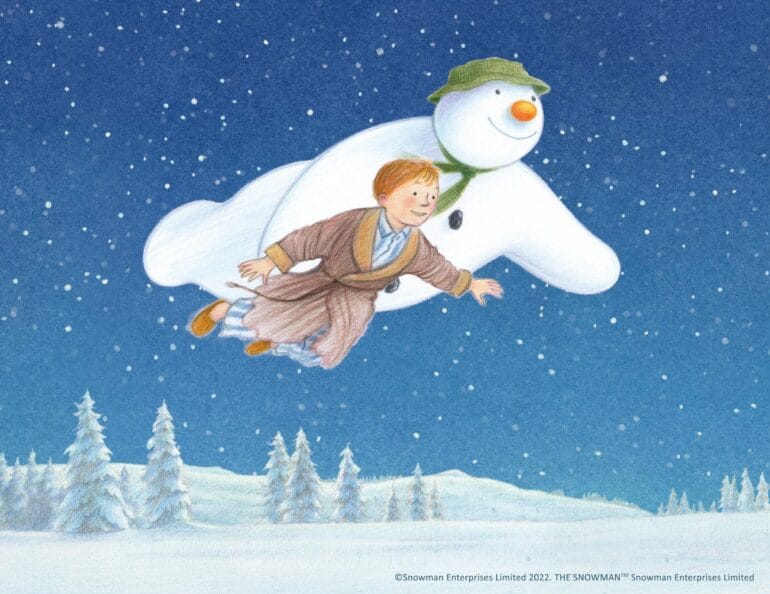
05 Pops: The Snowman, with Gillian Hunter The beloved film, two concerts: full live-to-picture (evening) + family sing-along (matinee) Holiday ConcertTwo-concert formatFamily programmingMusic School Tie-InAccess initiative Pops series · Two concerts
The Snowman (1982) — film still
The Snowman (1982) — Raymond Briggs / Channel 4
Gillian Hunter, host and Executive Director of the Vancouver Bach Choir
Gillian Hunter — host; Exec. Director, Vancouver Bach Choir
  • Howard Blake — The Snowman (1982), complete score performed live to picture
  • "Walking in the Air" — featured boy/girl treble soloist
  • Pre- and post-film selections drawing from a broad cultural palette: Anderson Sleigh Ride, Tchaikovsky Nutcracker excerpts, Leroy Anderson A Christmas Festival, Vaughan Williams Fantasia on Greensleeves; Hanukkah selections (Klezmer-flavoured arrangements, "Ocho Kandelikas"); a Kwanzaa-celebrating contemporary work; one or two contemporary Indigenous winter / seasonal pieces commissioned or arranged with local Secwépemc / BC Interior artists
  • Concert A — evening "Kids Night Out": full live-to-picture for the 8-through-teen audience. Very limited sing-along (one short moment only) so the film remains the centre. Catered dinner in the lobby, parents drop off, supervised social hour around the film — a real night-out for the kids and a holiday evening for the parents.
  • Concert B — matinee family sing-along: pre-K through grade-two with parents. Audience joins in on "Walking in the Air" and a wide set of singable holiday and seasonal pieces drawn from the English carol tradition, Hanukkah, Kwanzaa, Indigenous winter / seasonal songs, and contemporary family staples (lyric sheets in the programme; Gillian leads). Lighter, simpler hosting; craft table, hot chocolate, Snowman character meet, instrument petting zoo with KSO musicians in the lobby beforehand.
  • Matinee access initiative: subsidised tickets — targeted through sponsorship — for low-income families, at-risk youth, Tk’emlúps te Secwépemc and other Indigenous community partners, and geographically proximal communities (Merritt, Logan Lake, Clinton, Chase) that may not otherwise travel into Kamloops for live orchestral programming. The matinee becomes the year’s widest front door into the KSO.
  • Gillian Hunter as host — narration, framing, audience welcome (tone calibrated per concert)
Further concept ideas & details
  • Live-to-picture: orchestra plays Howard Blake’s 26-minute score in sync with the projected 1982 Channel 4 / Raymond Briggs film. UK holiday staple; fresh for Kamloops.
  • Featured boy/girl treble soloist for "Walking in the Air" drawn from a Kamloops school or church choir — a Music School tie-in that gives the moment its meaning and a local family their concert of the year.
  • Gillian Hunter hosts. She runs children’s orchestral programming and reads a room of small humans the way a conductor reads a section — frames the film for the youngest, gives parents permission to relax.
  • Gillian is also Executive Director of the Vancouver Bach Choir — a relationship worth cultivating. A win here opens the door to larger KSO–VBC projects: Messiah, War Requiem, Bach Christmas Oratorio, Sea Symphony — works that need a serious choir KSO doesn’t have to build in-house.
  • Possible pairing: VBC children’s choir travels to Kamloops for a short opening set before the film — a first taste of a deeper VBC partnership.
06 Themes and Variation The variation form, in varied styles Masterworks · Education Series
  • Ralph Vaughan Williams — Fantasia on Greensleeves
  • Charles Ives — Variations on "America"
  • Johannes Brahms — Variations on a Theme by Haydn, Op. 56a
  • Pyotr Ilyich Tchaikovsky — Symphony No. 5 in E minor, Op. 64
Further concept ideas & details
  • A Sunday youth matinee variant: drop the Tchaikovsky symphony and walk the audience through the Brahms variation by variation — a guided exploration of how a single theme is transformed.
  • That matinee could also fold in Britten’s The Young Person’s Guide to the Orchestra and Prokofiev’s Peter and the Wolf — the latter especially well suited to a core-sized orchestra.
07 4 + 4 + 4 Three works built around the number four Touring programmeRecording project Masterworks
  • Robert Schumann — Konzertstück for Four Horns and Orchestra, Op. 86
  • Wolfgang Amadeus Mozart — Horn Concerto No. 4 in E-flat, K. 495
  • Johannes Brahms — Symphony No. 4 in E minor, Op. 98
Further concept ideas & details
  • Invite the horn section of the Vancouver Symphony Orchestra to join for the rarely performed Schumann Konzertstück — a showpiece that asks for four virtuoso horns and is seldom programmed.
08 Ridout, Gershwin, Saint-Saëns A Canadian opener, an American voice, and the great Organ Symphony Masterworks
  • Godfrey Ridout — Fall Fair
  • George Gershwin — Rhapsody in Blue
  • Camille Saint-Saëns — Symphony No. 3 in C minor, Op. 78, "Organ"
Further concept ideas & details
  • Invite emerging Canadian artist Talisa Blackman as featured soloist and organist — at the keyboard for Rhapsody in Blue and at the organ for the Saint-Saëns.
09 Pops: Canadian Brass in Kamloops A two-concert collaboration with the Canadian Brass, conceived as a touring item Touring programmeDouble featureRecording project Pops series · Education Series
  • Concert 1 — Canadian Brass: a stand-alone evening (the quintet only)
  • Concert 2 — Solo Showcase: Canadian Brass principals as featured soloists with the orchestra
  • Repertoire built around brass-and-orchestra showpieces, with arrangements developed in conversation with the Brass
  • Designed for a core-orchestra footprint so the pairing can travel to other BC Interior venues as a KSO touring item
Further concept ideas & details
  • The stand-alone Canadian Brass evening can hold standard quintet repertoire — and also opens a commissioning opportunity: a new Canadian work written for each of the five instrumentalists.
  • Soloist & Commission programme extremely well suited to recording and strongly recommended.

Programming reflection

How I think about a season.

I look at programming as a collaborative job, built around not only my own interests, but also the context of the ensemble, audience, and strategic priorities in equal measure. It is a challenging, but critical balance that I take care not to do alone. Every example aspect below is viewed as a collaborative process with the orchestra, the Executive Director, and the Board.

Illustrative ideas

I am drawn to programming built around a single organising idea — an image, a region, a form, a number, a meeting of voices. The above programmes are written that way: each should read as a concert a subscriber can describe to a friend in one sentence, not as a sequence of accidentally adjacent works. That said, I have considered some aspects of the KSO (with my outdated personal experience) to help temper these.

Beyond single concerts, the kinds of structures I find compelling and would be interested in exploring with the KSO include:

  • Multi-season arcs that thread a composer, theme, or community through three or four years — a partial symphonic cycle, a "Voices of the BC Interior" thread, a sustained Canadian commissioning line. People love sequels!
  • Festivals and short residencies that concentrate energy around a composer or idea over a short time-frame. Events that create a regional (or greater) pull to our artistic hub in Kamloops.
  • Curated juxtapositions that recontextualise the canon — a Brahms symphony next to a contemporary Canadian work whose materials echo or answer it.

Exactly where the KSO goes on any of this is precisely the kind of decision the planning process should make, not a single voice. I arrive with appetite and ideas, not finished plans.

Balancing core repertoire, innovation, and community

My habit — like so many raised in a Western European tradition — is to anchor each season with pillars from the core symphonic repertoire — the works a traditional audience trusts the orchestra to deliver — and to structure the rest of the season around them. That default needs to be tested and evolve against organisational priorities, an honest analysis of recent seasons' programming, changing audiences and tastes, and stakeholder discussion before it becomes a commitment.

Innovation, in this context, comes first through commissions and the underexplored canon: women composers, BIPOC composers, Canadian voices, and the artists rooted in Tk'emlúps te Secwépemc territory and the wider Interior. Curatorial innovation and format experiments — a non-traditional venue, an immersive concert, an unexpected pairing — are meaningful but trickier to land, and easier to land well once the orchestra and its audience have a shared trust.

Community relevance, for me, is not a programming category. It is an input to every programming category. I treat audience signal, community co-creation, and education-aligned programming as three concurrent inputs to a single decision, and I am keen to leverage modern tools to analyze those inputs so that strategic planning is incrementally manageable with measurable outcomes.

This is one place I genuinely lean on the tools we now have. Audience analytics (who comes, why, what they renew); repertoire-to-attendance correlation drawn from KSO history and from comparable orchestras; predictive modelling for ticket and donor patterns; and AI as a creative collaborator for discovery and season pressure-testing — these are all in my working practice, and I would advocate for them at the service of the KSO. Arts organizations have never had more powerful tools available to drive success.

The regional-orchestra role

A regional orchestra in the BC Interior isn't a smaller version of a city orchestra. It's its own kind of organisation, with its own job to do. What gives the KSO its place is everything specific to it: Kamloops, its musicians, the music school it shares a name with, and more than fifty years of work in the BC Interior. Programming is where that relationship gets renewed, in public, every season.

To me, a Music Director's job is to keep those connections strong: ambitious enough artistically to make the orchestra proud, close enough to the community to keep earning its place, and careful enough with money that every future season stays possible. It comes from listening and adapting, with the orchestra, the Board, the audience, the school, and the wider community, and then making the artistic call. I would consider it a privilege to do that work with you.

Watch & listen

In rehearsal and in performance.

A short walk through the work, from the rehearsal room to the concert stage. Use the buttons to jump to any clip.

Orchestra
Wind Ensemble
Bonus: Family Music Classes

February 2026

Symphony No. 88 — video thumbnail

Symphony No. 88

Joseph Haydn

With Members of the University of Toronto Symphony Orchestra

Workshopping the first movement with the ensemble.

February 2026

Appalachian Spring — video thumbnail

Appalachian Spring

Aaron Copland

With Members of the University of Toronto Symphony Orchestra

Excerpts of playing and coaching from rehearsal.

Finlandia, selections — video thumbnail

Finlandia, selections

Jean Sibelius

Vancouver Orchestral Training Society, concert

Concert performance conducting the training orchestra he founded.

Symphony in D minor, selections — video thumbnail

Symphony in D minor, selections

César Franck

Vancouver Philharmonic Orchestra, concert

Concert performance with the Vancouver Philharmonic Orchestra.

2025

Medelpadia, opening — video thumbnail

Medelpadia, opening

Jan van der Roost

Toronto Concert Band, rehearsal

The opening passage after workshopping with the band: the rehearsal result.

2025

Medelpadia, workshopping — video thumbnail

Medelpadia, workshopping

Jan van der Roost

Toronto Concert Band, rehearsal

Workshopping excerpts: the developmental rehearsal process itself, up close.

December 2023

Symphonic Overture

Samuel Carter

Toronto Concert Band

A streaming recording of the Toronto Concert Band performance.

Babies & Toddlers Family Music Class — video thumbnail

Babies & Toddlers Family Music Class

Community music education

A bonus: teaching range and warmth with the youngest learners.

References

People who would speak for me.

These referees would be glad to speak to my work, including the late Bramwell Tovey, whose conducting reference letter is linked below.

  • Ken Hazlett Co-Music Director, Toronto Concert Band 416-358-5298
  • Les Dobbin, O.Ont. Co-Music Director, Toronto Concert Band 416-725-5361
  • Tony Field President, Toronto Concert Band 416-841-2472
  • Elizabeth Raum, S.O.M. Composer · Retired Principal Oboist, Regina Symphony 416-465-9212
  • Stacey Taylor Assistant Professor of Accounting, University of Ottawa 902-293-4959
Conducting reference letter — Bramwell Tovey Conductor · PDF

The next step

I'd love to meet you all!

Thank you for your time and kind consideration. It would be my pleasure to meet with your selection committee at your convenience. If you have any further questions in the meantime, please do not hesitate to reach out to me at any time. I look forward to hearing from you.

Telephone
416 525 6473
Barnaby Kerekes

Prepared for the KSO Music Director + Principal Conductor search · May 2026

Repertoire

Sample Orchestral Repertoire

A cross-section of orchestral works I have conducted — from student readings and training-orchestra rehearsals to concert performances. Not exhaustive: the pieces below are the ones I would point to first when asked what I have stood in front of an ensemble for.

  1. Classical Era

    • Beethoven — Ruins of Athens Overture
    • Haydn — Symphony No. 88
    • Mozart — Requiem
    • Weber — Euryanthe Overture
  2. Romantic Era

    • Berlioz — Beatrice and Benedict Overture
    • Brahms — Variations on a Theme by Haydn
    • Bruckner — Symphony No. 4, Scherzo
    • Dvořák — Symphony No. 6
    • Dvořák — Slavonic Dance No. 5 in B♭ minor
    • Fauré — Masques et Bergamasques
    • Franck — Symphony in D minor
    • Johann Strauss Jr. — Die Fledermaus Overture
    • Tchaikovsky — Symphony No. 5, mvt. 2
    • Verdi — Luisa Miller Overture
    • Verdi — La forza del destino Overture
  3. 20th Century

    • Copland — Appalachian Spring
    • Sibelius — Finlandia
    • Shostakovich — Festive Overture
    • van der Roost — Medelpadia
    • Carter — Symphonic Overture
  4. Canadian Commissions

    • Nicholas Francis — Fantasy on "The Skye Boat Song" for Trombone & Piano
    • Christopher Tyler Nickel — Poème for Bass Trombone
    • Christopher Tyler Nickel — Horizons for Orchestra
    • Elizabeth Raum — Concerto for Bass Trombone and Orchestra